Skills 2.0 (续) 克劳德技能培养完全指南 A complete guide to building skills for Claude
A complete guide to building skills for Claude
克劳德技能培养完全指南
Skills let you teach Claude your workflows once and apply them consistently. This guide covers how to build, test, and distribute them—whether for standalone workflows or MCP-enhanced integrations.
技能让您只需教授克劳德您的工作流程一次,就能持续一致地应用它们。本指南涵盖如何构建、测试和分发这些技能——无论是用于独立工作流程还是MCP增强型集成。
https://claude.com/blog/complete-guide-to-building-skills-for-claude
Since launching Skills in October, we've seen strong interest from developers who want Claude to follow specific workflows consistently, power users automating repeatable tasks like document creation or research processes, teams looking to standardize how Claude operates across their organization, and MCP connector builders pairing their integrations with reliable workflows.
The common thread: people want more detailed guidance on building effective skills—whether for standalone workflows or MCP-enhanced integrations—from planning and structure to testing and distribution.
We put together this guide to fill that gap. It covers everything from technical requirements and skill structure to testing approaches and common troubleshooting patterns. Whether you're building standalone skills that work with Claude's built-in capabilities or enhancing an MCP integration, you'll find the guidance relevant—with a dedicated section on MCP + Skills for those who want it.
https://blog.csdn.net/D1237890/article/details/160591445
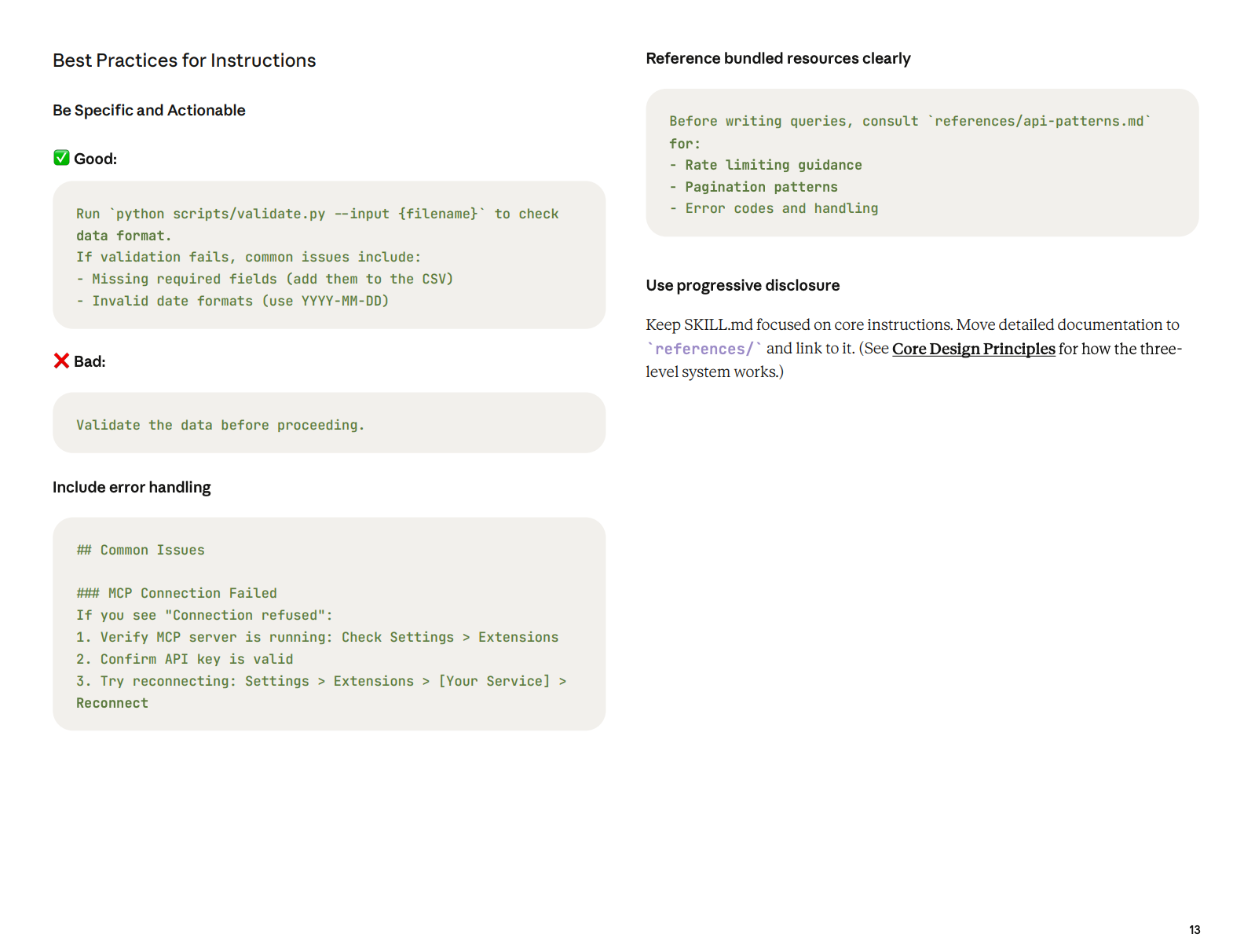
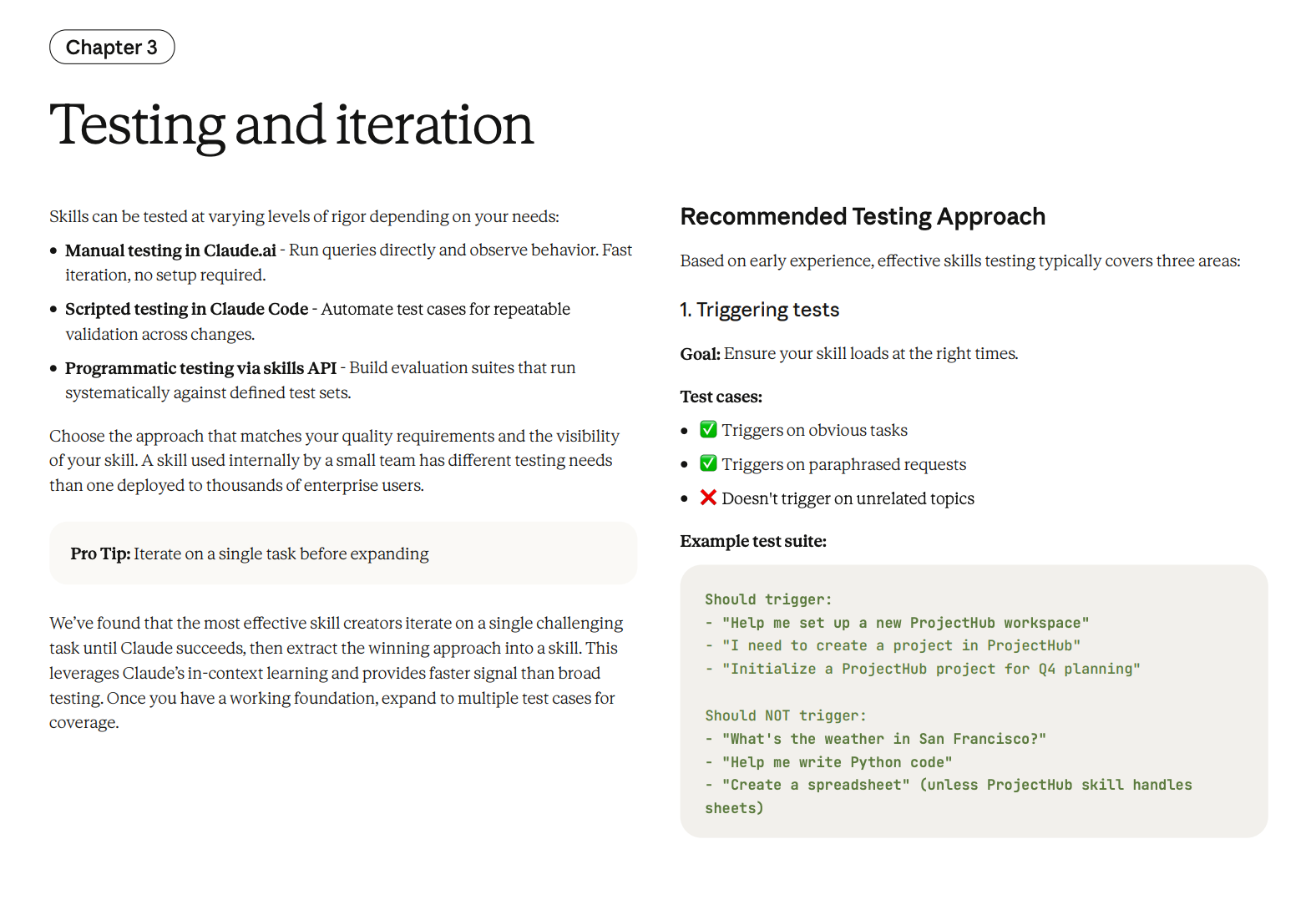
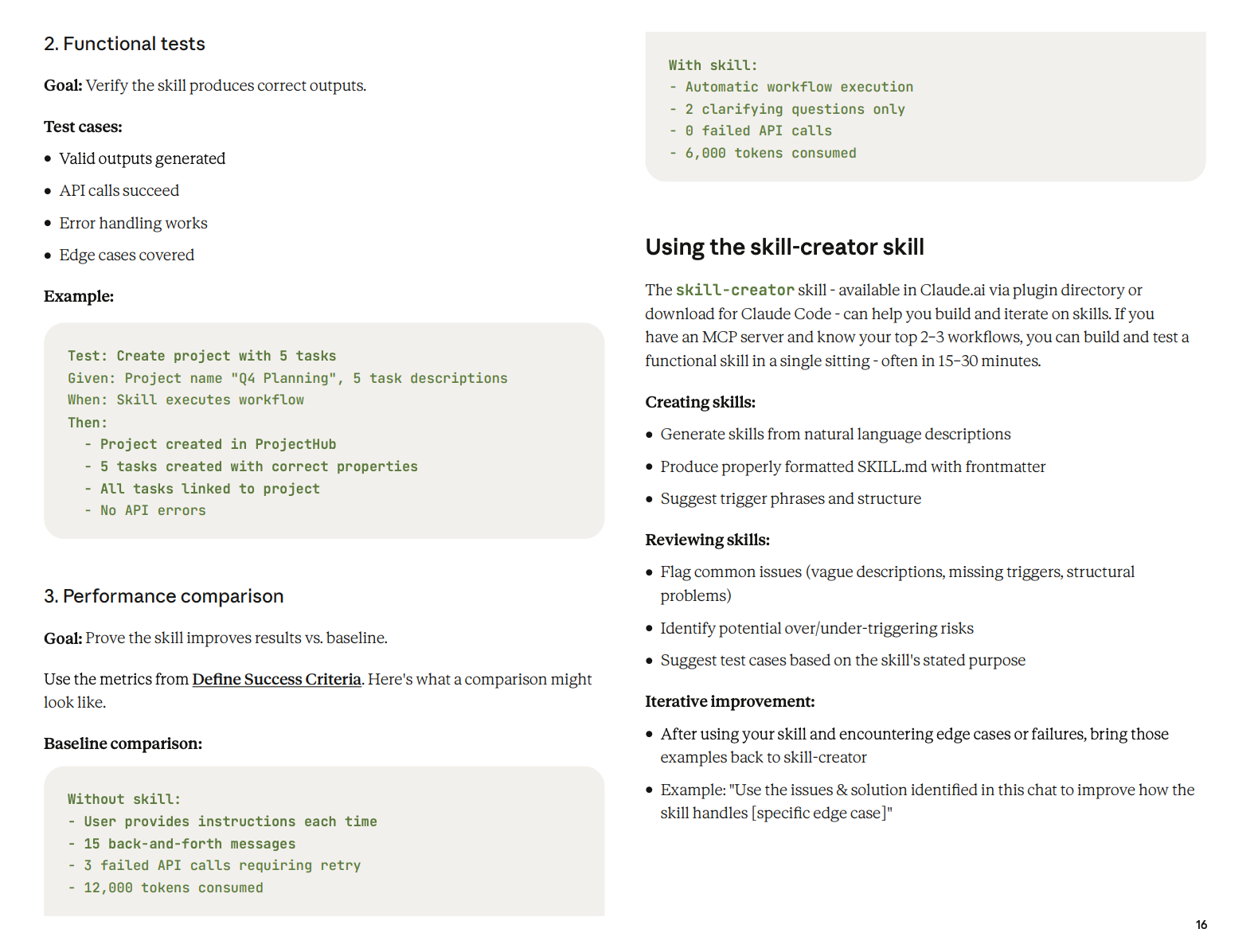
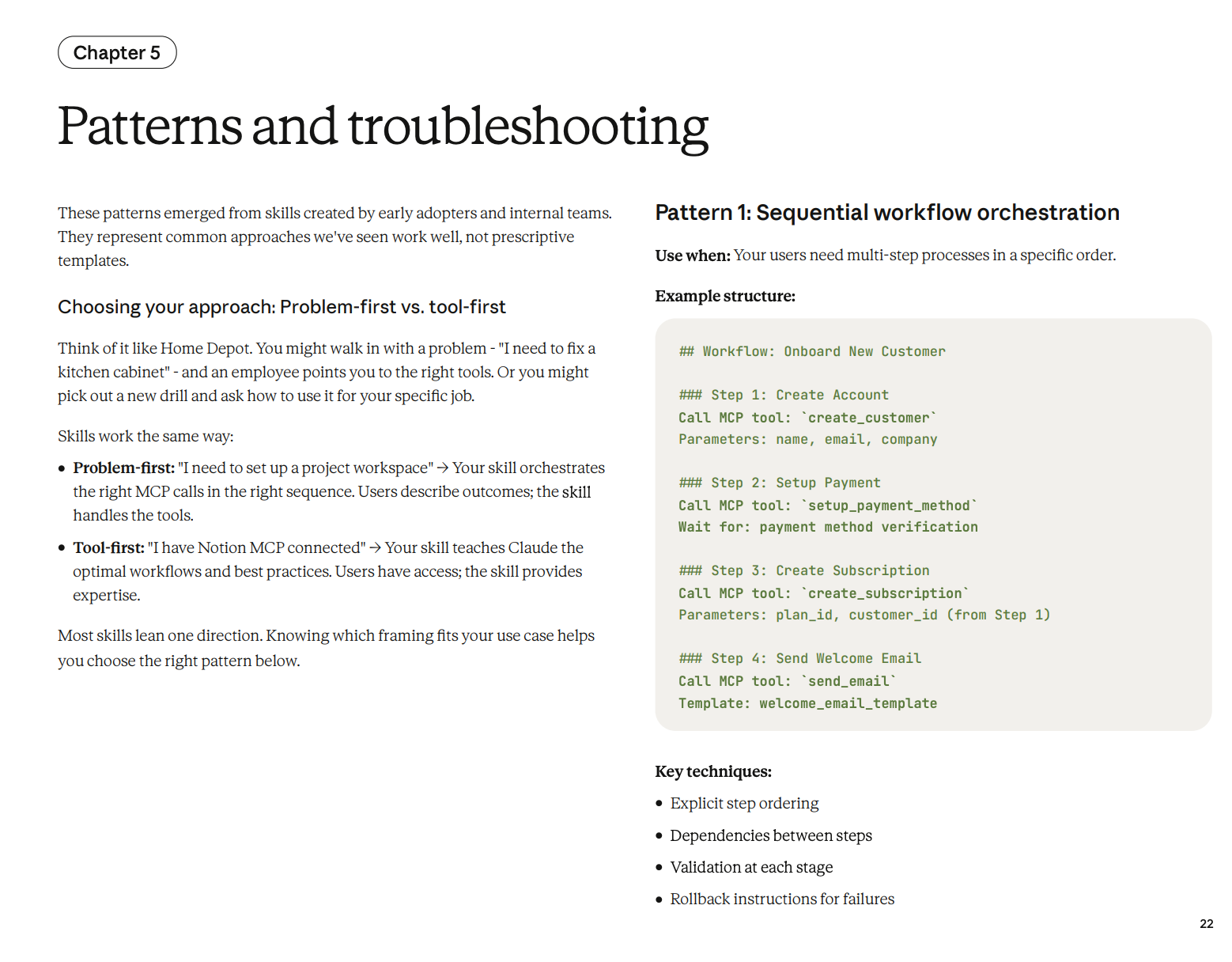
These patterns emerged from skills created by early adopters and internal teams. They represent common approaches we've seen work well, not prescriptive templates.
Choosing your approach: Problem-first vs. tool-first
Think of it like Home Depot. You might walk in with a problem - "I need to fix a kitchen cabinet" - and an employee points you to the right tools. Or you might pick out a new drill and ask how to use it for your specific job.
Skills work the same way:
• Problem-first: "I need to set up a project workspace" → Your skill orchestrates the right MCP calls in the right sequence. Users describe outcomes; the skill handles the tools.
• Tool-first: "I have Notion MCP connected" → Your skill teaches Claude the optimal workflows and best practices. Users have access; the skill provides expertise.
Most skills lean one direction. Knowing which framing fits your use case helps you choose the right pattern below.
这些模式源自早期采用者和内部团队创建的技能。它们代表了我们观察到的常见有效方法,而非规定性模板。
选择你的路径:问题导向 vs 工具导向
想象走进家得宝超市的情景。你可能带着问题进门——"我需要修理厨房橱柜"——店员会指引你选择合适的工具。或者你可能先挑中一把新电钻,然后咨询如何用它完成具体工作。
技能运作原理相同:
• 问题导向:"我需要建立项目工作区" → 你的技能会按正确顺序协调MCP调用。用户描述结果,技能处理工具。
• 工具导向:"我已连接Notion MCP" → 你的技能会向Claude传授最佳工作流程和实践方案。用户拥有工具,技能提供专业知识。
多数技能会侧重某一方面。了解哪种框架适合你的使用场景,有助于选择下文中的正确模式。

欢迎加入DeepSeek 技术社区。在这里,你可以找到志同道合的朋友,共同探索AI技术的奥秘。
更多推荐
 9
9 0
0- 0


 已为社区贡献28条内容

所有评论(0)