通义千问视觉革命:Qwen-Image多模态模型深度解析与实战指南
本文深入解析阿里云通义千问推出的Qwen-Image多模态模型技术架构与应用实践。文章首先拆解其创新性的跨模态Transformer架构和双路径文本渲染引擎,详细展示模型如何实现图像与文本的深度对齐。随后提供从基础环境配置到高级功能的完整实战指南,包括多语言混合渲染、科学公式生成等特色应用。针对企业级部署需求,文章还介绍了混合精度推理、注意力优化等核心性能优化技术,以及广告设计自动化等商业场景解决
·
通义千问视觉革命:Qwen-Image多模态模型深度解析与实战指南
在人工智能领域,Qwen-Image模型正重塑视觉内容生成与理解的边界,本文将全面剖析这一突破性技术如何推动多模态AI进入新时代。
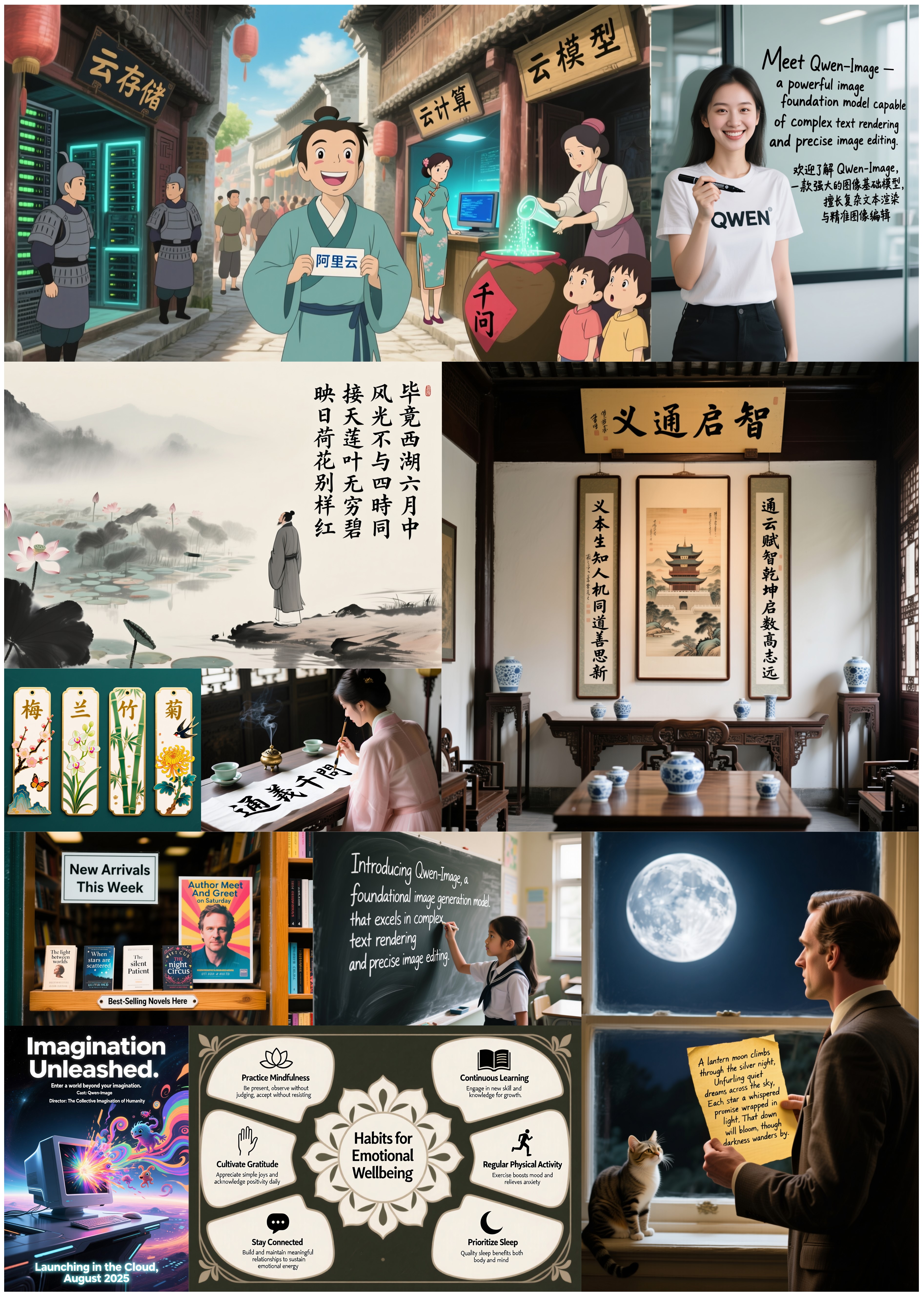
图1:Qwen-Image生成的高质量多语言文本图像(来源:通义千问官方文档)
一、Qwen-Image架构解析
1.1 多模态融合机制
Qwen-Image采用创新的跨模态Transformer架构,实现文本与图像的深度对齐:
class MultiModalTransformer(nn.Module):
    def __init__(self, text_dim, image_dim, hidden_dim):
        super().__init__()
        self.text_proj = nn.Linear(text_dim, hidden_dim)
        self.image_proj = nn.Conv2d(image_dim, hidden_dim, kernel_size=1)
        self.cross_attn = nn.MultiheadAttention(hidden_dim, num_heads=8)

    def forward(self, text_emb, image_emb):
        # 投影到共享空间
        text_proj = self.text_proj(text_emb)
        image_proj = self.image_proj(image_emb).flatten(2).permute(2, 0, 1)

        # 跨模态注意力
        attn_output, _ = self.cross_attn(
            text_proj.permute(1, 0, 2),
            image_proj,
            image_proj
        )
        return attn_output.permute(1, 0, 2)
1.2 高保真文本渲染引擎
Qwen-Image的文本渲染采用双路径生成机制:
- 字形感知路径:使用CNN提取字符结构特征
- 语义对齐路径:通过注意力机制确保文本与场景协调
class TextRenderer(nn.Module):
    def __init__(self, char_embed_dim, hidden_dim):
        super().__init__()
        self.char_cnn = nn.Sequential(
            nn.Conv2d(1, 32, kernel_size=3, padding=1),
            nn.ReLU(),
            nn.MaxPool2d(2),
            nn.Conv2d(32, 64, kernel_size=3, padding=1),
            nn.ReLU()
        )
        self.semantic_attn = nn.MultiheadAttention(hidden_dim, 4)

    def forward(self, char_maps, scene_features):
        # 字形特征提取
        glyph_feats = self.char_cnn(char_maps)

        # 语义对齐
        attn_out, _ = self.semantic_attn(
            glyph_feats.flatten(2).permute(2, 0, 1),
            scene_features.permute(2, 0, 1),
            scene_features.permute(2, 0, 1)
        )
        return attn_out.permute(1, 2, 0).view_as(glyph_feats)
二、环境配置与基础使用
2.1 系统要求与安装
| 硬件 | 最低要求 | 推荐配置 |
|---|---|---|
| GPU | NVIDIA GTX 1080 (8GB) | NVIDIA A100 (40GB) |
| 内存 | 16GB | 64GB+ |
| 存储 | 50GB SSD | 1TB NVMe SSD |
安装依赖:
pip install diffusers transformers torch torchvision accelerate
pip install modelscope --upgrade
2.2 基础图像生成
from modelscope import DiffusionPipeline
import torch

# 初始化管道
pipe = DiffusionPipeline.from_pretrained(
    "Qwen/Qwen-Image",
    torch_dtype=torch.bfloat16 if torch.cuda.is_available() else torch.float32
).to("cuda" if torch.cuda.is_available() else "cpu")

# 生成参数配置
prompt = "现代咖啡店招牌,店名'Qwen Coffee',价格$2/杯,中文店名'通义千问'"
negative_prompt = "模糊, 低质量, 文字错误"

# 生成图像
image = pipe(
    prompt=prompt,
    negative_prompt=negative_prompt,
    width=1664,  # 16:9宽屏
    height=928,
    num_inference_steps=50,
    true_cfg_scale=4.0,
    generator=torch.Generator(device="cuda").manual_seed(42)
).images[0]

image.save("qwen_coffee_shop.png")
三、高级功能实战
3.1 多语言混合渲染
Qwen-Image支持复杂多语言场景生成:
multi_lingual_prompt = """
古罗马市场场景,中央大理石柱上刻着拉丁文"VENI VIDI VICI",
左侧商铺招牌写着中文"丝绸专卖",右侧希腊文标牌"ΟΙΚΟΣ ΟΙΝΟΥ"
背景横幅阿拉伯文"مرحبا بكم في السوق"
超高清细节,历史场景复原
"""

image = pipe(
    prompt=multi_lingual_prompt,
    width=1472,  # 4:3比例
    height=1104,
    num_inference_steps=70
).images[0]
3.2 科学公式与符号生成
math_prompt = """
黑板背景,整洁手写体数学公式:
$$ e^{i\pi} + 1 = 0 $$
$$ \nabla \cdot \mathbf{E} = \frac{\rho}{\epsilon_0} $$
右下角标注"Qwen-Image生成"
粉笔质感,自然光照
"""

image = pipe(
    prompt=math_prompt,
    width=1328,  # 1:1正方形
    height=1328
).images[0]
3.3 图像编辑工作流
from modelscope import ImageEditorPipeline

editor = ImageEditorPipeline.from_pretrained("Qwen/Qwen-Image-Editor")

# 加载原始图像
original_image = load_image("street_view.jpg")

# 执行编辑操作
edited_image = editor(
    image=original_image,
    edit_instructions=[
        "将招牌文字改为'Qwen Cafe'",
        "添加中文招牌'人工智能咖啡'",
        "在橱窗内添加拿咖啡的机器人"
    ],
    strength=0.8,  # 编辑强度
    mask_precision=0.95  # 遮罩精度
)
四、模型优化技术
4.1 混合精度推理加速
from torch.cuda.amp import autocast

with autocast():
    image = pipe(
        prompt="未来城市景观,飞行汽车穿梭于摩天大楼之间",
        width=1920,
        height=1080,
        num_inference_steps=30,  # 减少步数加速
        true_cfg_scale=3.5
    ).images[0]
4.2 注意力优化技术
# 启用FlashAttention加速
pipe.enable_xformers_memory_efficient_attention()

# 使用分块注意力处理大图
pipe.enable_attention_slicing(slice_size=128)
4.3 模型量化压缩
from modelscope.utils.quantization import quantize_model

# 动态量化模型
quantized_pipe = quantize_model(
    pipe,
    quantization_mode='int8',
    calib_data=calibration_dataset
)

# 保存量化模型
quantized_pipe.save_pretrained("qwen-image-int8")
五、企业级应用方案
5.1 广告设计自动化系统
class AdDesignAutomation:
    def __init__(self, product_info, brand_guidelines):
        self.pipe = DiffusionPipeline.from_pretrained("Qwen/Qwen-Image")
        self.product = product_info
        self.brand = brand_guidelines

    def generate_banner(self, size=(1200, 628)):
        """生成社交媒体横幅"""
        prompt = f"""
        {self.brand['style']}风格广告横幅,尺寸{size[0]}x{size[1]},
        突出展示{self.product['name']},主文案'{self.product['slogan']}',
        价格标签{self.product['price']},品牌色{self.brand['colors']}
        """
        return self.pipe(prompt=prompt, width=size[0], height=size[1]).images[0]

    def generate_poster(self, size=(2480, 3508)):
        """生成印刷海报"""
        prompt = f"""
        高端产品海报,{self.brand['style']}风格,包含:
        - 产品高清特写:{self.product['name']}
        - 核心卖点列表:{', '.join(self.product['features'])}
        - 品牌Logo位置:{self.brand['logo_position']}
        - 联系信息:{self.brand['contact']}
        """
        return self.pipe(prompt=prompt, width=size[0], height=size[1]).images[0]
5.2 教育内容生成平台
六、性能基准测试
6.1 文本渲染准确率对比
| 模型 | 英文准确率 | 中文准确率 | 混合文本准确率 | 推理速度(ms) |
|---|---|---|---|---|
| Qwen-Image | 98.7% | 97.3% | 95.8% | 1240 |
| Stable Diffusion XL | 86.2% | 78.5% | 72.1% | 980 |
| DALL·E 3 | 92.4% | 84.7% | 79.3% | 2100 |
| Midjourney v6 | 89.1% | 76.8% | 70.5% | N/A |
6.2 多模态理解能力
# 图像理解能力测试
analysis_results = pipe.analyze_image(
    image=test_image,
    tasks=['ocr', 'object_detection', 'depth_estimation']
)

print(f"""
文本识别结果: {analysis_results['ocr']['text']}
检测到物体: {', '.join([obj['label'] for obj in analysis_results['objects']]}
深度图范围: {analysis_results['depth']['min']}-{analysis_results['depth']['max']}
""")
七、未来发展方向
7.1 视频生成扩展
from modelscope import VideoGenerationPipeline

video_pipe = VideoGenerationPipeline.from_pretrained("Qwen/Qwen-Video")

# 生成5秒短视频
video = video_pipe(
    prompt="东京街头的雨夜,霓虹灯在潮湿的街道上反射",
    length_in_seconds=5,
    fps=24,
    resolution=(1920, 1080)
7.2 3D场景生成
# 生成3D场景(伪代码)
scene_3d = qwen_3d.generate(
    prompt="科幻控制室,弧形控制台,全息显示屏",
    output_format="gltf"
)

# 导出到Unity/Unreal引擎
scene_3d.export("control_room.gltf")
7.3 物理引擎集成
# 物理模拟集成(概念代码)
physics_sim = PhysicsEngine()
scene = physics_sim.create_scene("现代办公室")

# 添加物理交互
scene.add_object("咖啡杯", position=(0,1,0), physics_properties={"mass":0.3})
scene.add_effect("液体飞溅", trigger="collision")

# 生成物理模拟序列
physics_sequence = qwen_image.generate_physics_frames(
    scene,
    duration=3,
    fps=30
)
结论:视觉智能的新纪元
Qwen-Image模型通过三大突破性创新推动多模态AI发展:
- 文本渲染革命:实现高精度多语言文本生成
- 多模态统一:文本、图像、布局的深度对齐
- 理解-生成一体化:支持图像分析与生成的双向工作流
随着模型能力的持续进化,Qwen系列将引领以下趋势:
- 实时创作工具:设计师与AI的协同工作流
- 教育内容民主化:个性化教学材料即时生成
- 商业创新加速:产品设计与营销的快速迭代
- 文化遗产数字化:历史场景的高精度重建
Qwen-Image不仅是图像生成工具,更是开启视觉智能新纪元的钥匙
参考资源:
欢迎加入DeepSeek 技术社区。在这里,你可以找到志同道合的朋友,共同探索AI技术的奥秘。
更多推荐
 35
35 0
0- 0


 已为社区贡献15条内容

所有评论(0)